



The Arctic is a wonderful gateway to introducing young children to early concepts of geography, biology, and physics. Young children (2–8 years) learn best when subjects are interconnected. When these ideas are delivered through storytelling, rhythm, and engaging characters, they feel natural rather than instructional. The goal for us as parents and educators is not subject mastery, but the cultivation of curiosity.
Why This Approach Works?
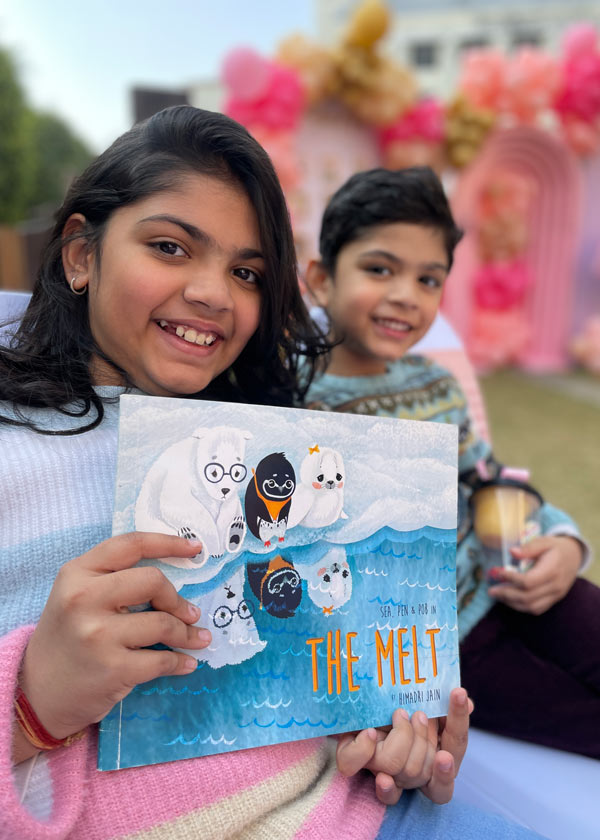
Through Arctic themed picture book series like Sea, Pen & Pob Series by Himadri Jain, children’s attention is sparked and easily sustained. Stories invite them in gently, allowing complex ideas to unfold in ways that feel playful and memorable rather than academic.
Here’s how the Arctic can gently introduce core curriculum themes:
Geography: Where Is the Arctic?
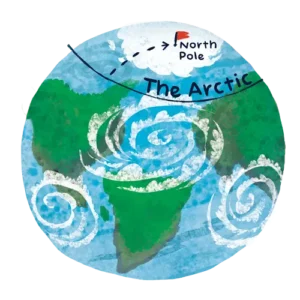
At this age, children don’t need coordinates or map scales. Instead, introduce:
-
The globe as “a ball-shaped map of our Earth.”
-
The Arctic as “the very top of the Earth.”
-
Words like north, cold place, and snowy land.
You can show children how the top of the globe is white and icy. Spin the globe and say,
“If we travel all the way up, up, up — we reach the Arctic!”
Curriculum pointer:
-
Understanding maps and globes
-
Directional language (up, top, north)
-
Awareness of different places on Earth
Biology: How Do Animals Survive the Cold?

The Arctic becomes a perfect introduction to adaptation.
Instead of technical terms, simplify it:
-
Polar bears have thick fur and fat to stay warm.
-
Seals have blubber (a warm fat layer).
-
Arctic foxes change fur color.
Ask children:
-
“What do you wear when you feel cold?”
-
“How does a polar bear stay warm without a jacket?”
Now they’re comparing humans and animals — the beginning of biological thinking.
Curriculum pointer:
-
Animal habitats
-
Adaptation
-
Basic needs (food, shelter, warmth)
Environmental Science: Why Are There No Trees In The Arctic?
The Arctic tundra introduces the idea that plants need certain conditions to grow.
Keep it simple:
-
The ground stays frozen for most of the year.
-
Trees need deep soil and warmth.
-
In very cold places, only small plants can grow.
You might say:
“Trees need strong roots. But when the ground is frozen like ice, roots cannot grow deep.”
This introduces cause and effect — a foundational scientific concept.
Curriculum pointer:
-
Plant needs
-
Climate and environment
-
Observing differences in landscapes
Physics: Why Do Icebergs float in Oceans ?
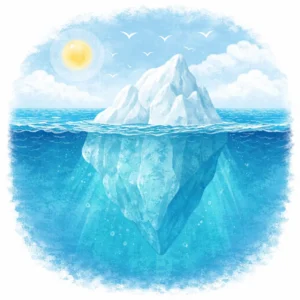
This is a magical concept for young minds. Show a bowl of water with ice cubes and ask:
-
“Does the ice sink or float?”
Explain simply:
“Ice is lighter than water, so it floats on top.”
You can connect it back to icebergs:
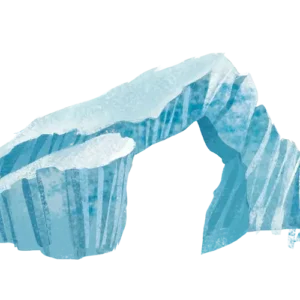
“That’s why giant pieces of ice float in the Arctic Ocean.”
No need for density formulas — just observation and wonder.
Curriculum pointer:
-
Floating and sinking
-
States of matter (solid vs. liquid)
-
Observation and prediction
Through imagination and narrative, children begin to see the world not simply as it is, but as something to explore, understand, and care for.